
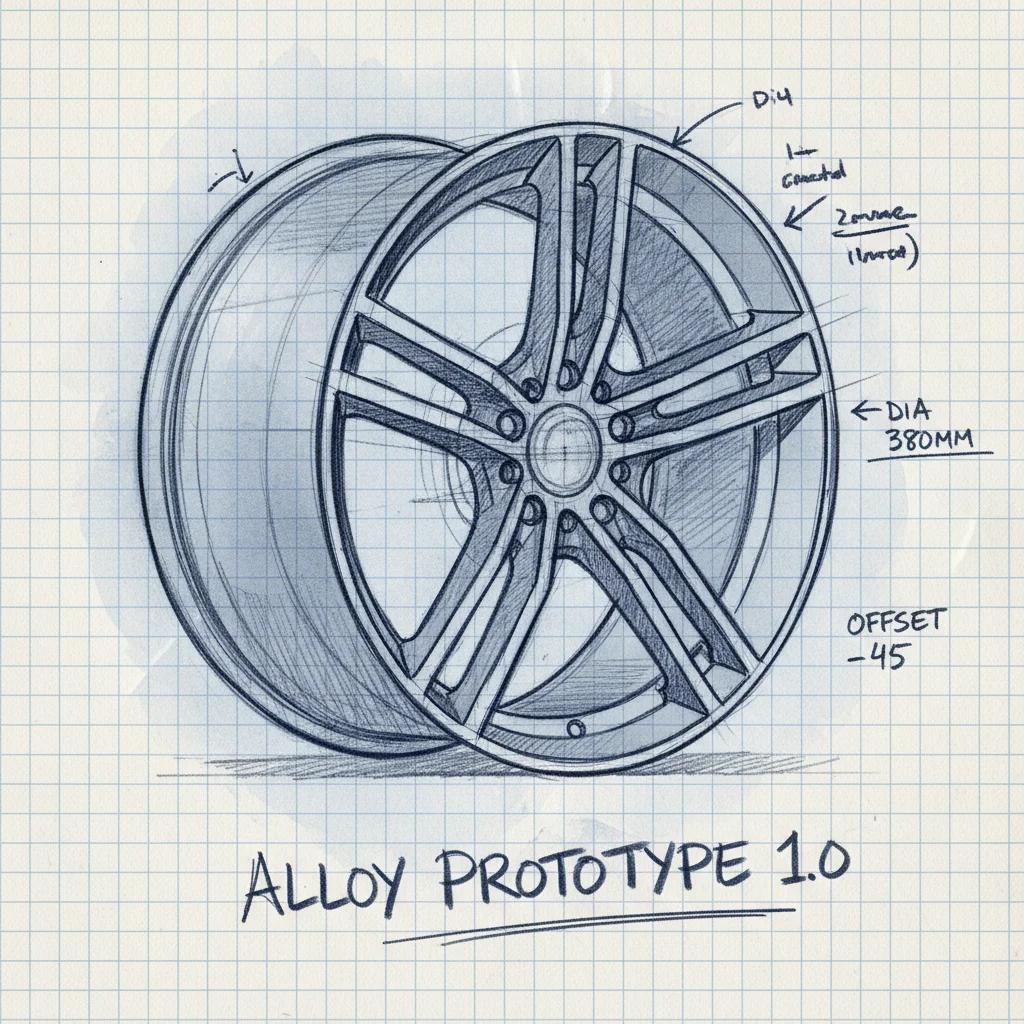
Hit a nasty pothole and now there’s a bend, a shake, or a slow leak? Before you spend big on a replacement, know this: most alloy wheels can be repaired — but not all of them, and safety has to come first.
When a wheel can be repaired
- Curb rash and cosmetic damage — nearly always repairable.
- Bent lips and moderate buckles — straightened on a hydraulic machine and returned to true.
- Small cracks on the inner barrel — often TIG-welded by a certified tech and refinished.
When you should replace it
Some damage can’t be made safe, and a good shop will tell you so:
- Cracks on the bead seat or at a spoke junction
- Severe bends that have compromised the structure
- A wheel that’s already been straightened twice
The rule we live by: if we wouldn’t drive on it, we won’t hand it back to you. We’d rather tell you to replace a wheel than send you off on one that isn’t safe.
Is it safe to drive on in the meantime?
Cracked? No — a crack can lose air suddenly and cause a blowout. Bent? Only briefly, and gently — a bend causes vibration, leaks and extra wear the longer you drive on it.
Not sure which yours is?
Send us a photo. We’ll tell you honestly whether it’s a repair or a replacement — and quote it either way.